Welcome to WordPress. This is your first post. Edit or delete it, then start writing!
Blog
-
Reader Questions: Is My Cat Covered if She Pushes Her Own Bowl?
Is a bowl pushed by its own cat a loss?
Yes, but a small one. The bowl has no feelings, though its contents may.
What if the cat pushes the bowl, and then complains?
This is a known behaviour called the double claim. We treat it as one claim with two grievances.
What if the bowl is empty?
An empty bowl pushed from a counter is not a loss, but a statement. The Bureau does not insure statements.
What if the cat eats from the floor?
This is covered under the Dining Extension, which has never been used.
What if the bowl breaks?
Then the bowl becomes a claim, and the claim becomes a file, and the file becomes a story, and the story is one we are very happy to tell.
What about a bowl pushed by someone else’s cat?
This is covered under the Visitor Extension, which applies only if the visiting cat is known to the household, was invited, and left a tip.
What if my cat pushes the bowl at three in the morning?
The time of day does not affect the claim, but it does affect the mood of the assessor. We recommend submitting early claims after nine.
What if I do not own a cat?
Then who pushed the bowl? The Bureau finds this question troubling and recommends you check the neighbours.
What if the bowl lands on my foot?
That is a separate claim, and a separate form, and a separate feeling, and we encourage you to file it with a dry sense of humour.
Will my premium go up?
Your premium will go up in the way that all things go up, which is by gently rolling toward the edge.
Last word
If your bowl is still intact, congratulations. Please do not tell the cat.
-
Case File 0577: The Fish Tank Incident
The policyholder returned home at 6 PM to find the living room carpet saturated, a fish tank empty, and the cat sitting on the sofa with a look of tidy innocence. The fish, remarkably, were found alive in a mixing bowl. Someone, it seems, had rescued them in a hurry.
Initial assessment
The assessor noted a paw print on the edge of the tank. It was wet. It was also, by the shape of it, a cat’s. The cat declined to elaborate.
Complicating factors
The tank was a decorative model with a thin lid, a feature the policyholder described as “stylish.” The lid was found on the floor. The cat was found beneath a blanket, apparently asleep.
Outcome
Claim approved, less excess. The policyholder has been advised to purchase a heavy lid, and the cat has been advised to apologise to the fish. The fish have not yet forgiven her.
Statements
The policyholder was asked whether the cat had ever shown an interest in the fish. “Only every day,” he replied. A neighbour was asked whether she had heard a splash. “I heard a thud, then a splash, then a very long silence,” she said, “and then I heard someone say, ‘Oh, you did not.’” We have accepted this as the clearest account of the afternoon.
The fish
Both fish, one orange and one rather offended grey, were assessed by a vet and declared fit. They have since been given a larger tank, with a heavy lid, an alarm and a small sign saying “Please.” The orange fish has become something of a local celebrity.
Financial summary
The claim for the carpet was paid in full, less excess and a small deduction for the policyholder describing the lid as “stylish.” The claim for the fish was declined on the grounds that fish are not insured against being rescued.
-
Field Notes: The Cushion Question
A recurring dispute in our claims department concerns the cushion. It lies on the floor, it appears in photographs, and it is occasionally blamed.
The soft landing argument
Some policyholders claim that a cushion beneath a falling item should prevent a loss. Our panel observed that this is true, but only if the cushion is placed there before the fall rather than after.
The trap argument
Others claim that cushions are a trap, placed deliberately by the cat so that she can say the fall was gentle. We have no evidence for this, though it is exactly what a clever cat would do.
The witness argument
A third view holds that the cushion saw everything. We attempted to interview a cushion. It did not respond, which the panel regards as suspicious.
Ruling
The panel has concluded that a cushion is neither a landing, a trap, nor a witness, but a cushion. We recommend that cats be allowed to sit on them as a matter of course.
Public submissions
The panel received eleven written submissions on the subject. Nine argued that the cushion was a soft landing. One argued that it was a trap. One was a drawing of a cushion with a small face, which the panel found moving but unhelpful.
Practical advice
Policyholders are advised not to rely on cushions as a protective measure. Instead, they should keep fragile objects away from edges and cats away from objects. If both are impossible, a cushion is a pleasant thing to have nearby, and it makes the aftermath more comfortable for everyone.
Dissenting opinion
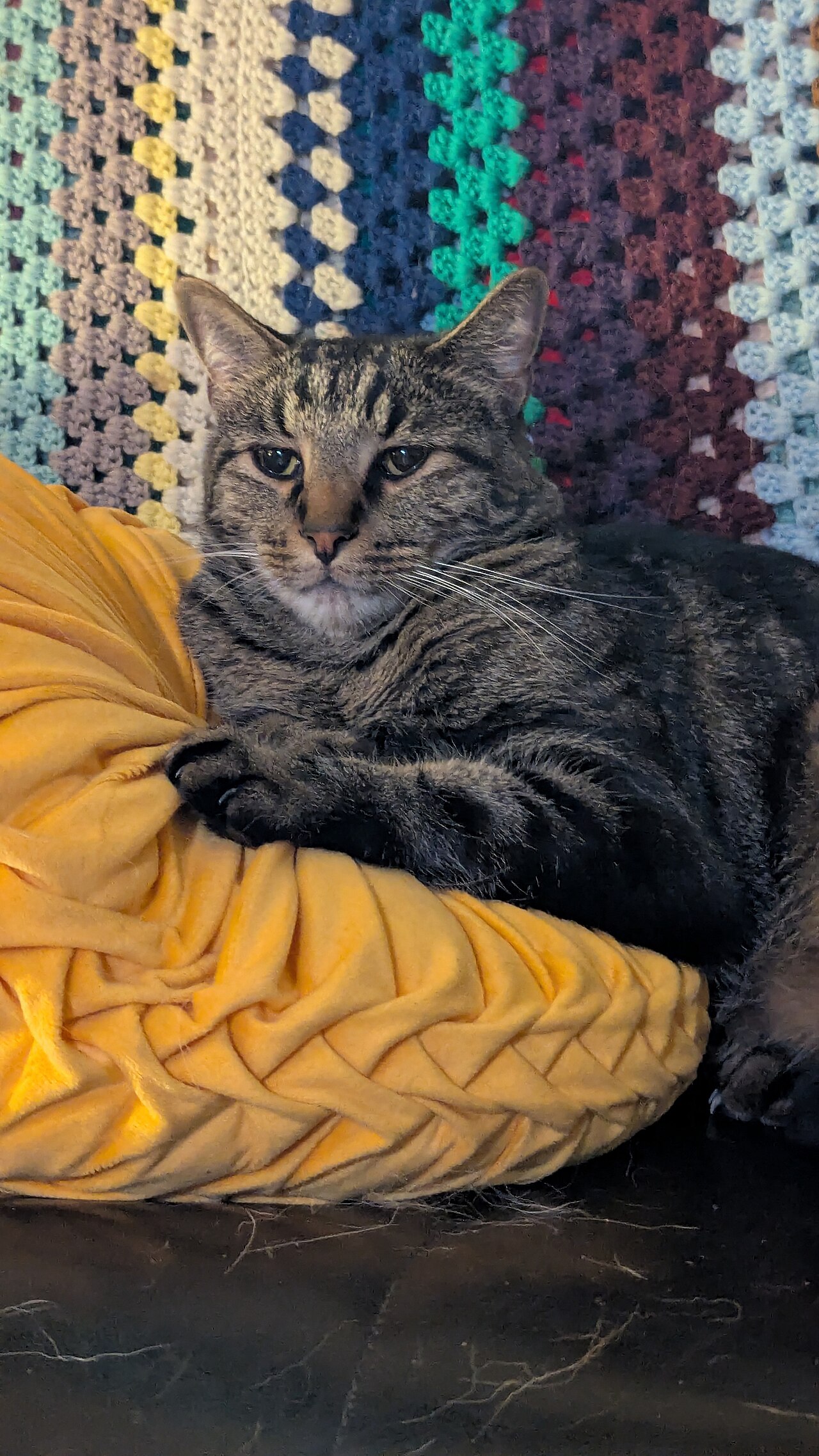
One panel member, a brisk grey cat named Ledger, filed a dissent. It read, in full, “It is a cushion. I am sitting on it.” The panel noted her view and asked her to move.
Closing remark
The cushion has since been returned to the sofa, where it remains under review.
-
Premium Calculator: How We Price Your Household Risk
Customers often ask how we calculate their premium. The truthful answer is that we ask the cat. The more elaborate answer follows.
The basic rate
Every household starts at a base premium of £14 a month. This covers one cat, one room and one shelf. For each additional cat we add £6, a figure that reflects the fact that two cats are not twice as much trouble but about four times.
Risk factors
- The number of shelves lower than a metre from the floor.
- The presence of a glass tabletop, which adds £3 and a warning.
- Whether any household member has ever said “she would never.”
- The cat’s age, with kittens carrying the highest loading and old cats the highest dignity.
Discounts
We offer a discount for households with no breakables, though no household has qualified so far. A small discount is also available for those who attach their valuables to the wall with museum putty, and a larger one for those who give up and live without valuables.
A word on fairness
We are committed to fair pricing. Every customer is assessed by the same formula, applied by the same cat, on the same day of the week, at the same level of enthusiasm.
Worked example
A household with two cats, a glass coffee table and a collection of tiny porcelain owls comes to a base of £14, plus £6 for the second cat, plus £3 for the table, plus £22 for the owls, which the Bureau regards as an invitation. The total is £45 per month, which we round up to £50 for dignity.
Appeals
Customers who feel their premium is unfair may appeal by writing to the Bureau and enclosing a photograph of the cat looking responsible. If the photograph is convincing, we will reduce the premium by £1. If not, we will frame it.
-
Assessor Handbook Extract: How To Interview a Suspect Cat
Before you begin
A cat interview is not a conversation. It is a negotiation, and the cat holds all the cards, most of them in her paws. Prepare a calm room, a comfortable chair, a notebook and a small plate of something fishy. Do not bring a tape recorder. Cats consider recorders rude.
Opening the interview
Begin with a casual greeting, such as “Good afternoon.” The cat will not respond. This is normal. Wait for a count of ten and then say, “I understand there was an incident.” The cat will look at the wall. Make a note.
Key questions
- Where were you at the time of the incident?
- What were your intentions?
- Is this your tail, or is it a colleague’s?
- Would you say the vase looked ready?
Interpreting the answers
A cat who answers by washing her face is saying “I decline to comment.” A cat who walks away slowly is saying “I have already been cleared.” A cat who falls asleep is saying “You are not very good at this.”
Concluding the interview
Thank the cat. Do not shake a paw. Leave a treat as a gesture of goodwill and do not mention it in the report.
Common pitfalls
Do not interview two cats at once. They will reach a private agreement within seconds, usually based on a look, and you will be left with two identical silences. Do not offer a cat a seat that is lower than yours. She will take it as an insult and sit on your coat instead. Do not ask a cat to describe a vase in her own words. She will use the only word she has, which is a very long stare.
Notes on body language
- Slow blink: a sign of trust, or of boredom, depending on the hour.
- Ears flat: a sign that you have reached the end of the interview.
- Tail wrapped around the paws: a sign of composure, and probably guilt.
- Standing up, stretching and walking away: a sign of a full confession, delivered in the only language she has.
-
Press Release: Excess Now Payable in Treats
FOR IMMEDIATE RELEASE
The Purrfect Drop Insurance Assessors are delighted to announce a sweeping reform of the policy excess, effective immediately. From the first of next month, customers may pay their excess in treats.
“We listened,” said Director Dame Pomfret Haddock. “Our customers told us the excess was too high. They told us it was confusing. They told us, on several occasions, that it was an insult. We have therefore replaced it with something that cats understand.”
How it works
The excess for most claims will be set at twelve treats, delivered in a sealed pouch. For larger claims, the excess will increase to forty treats, a bonus pouch and a written apology to the cat.
Frequently asked questions
Can I pay in cash? Yes, but cash will be pushed off a table.
Are the treats counted? They are counted by Inspector Quill, who is known to miscount in a way that benefits her.
What if my cat eats the excess? This is classed as an act of cat and will be added to your next claim.
Statement from the cat community
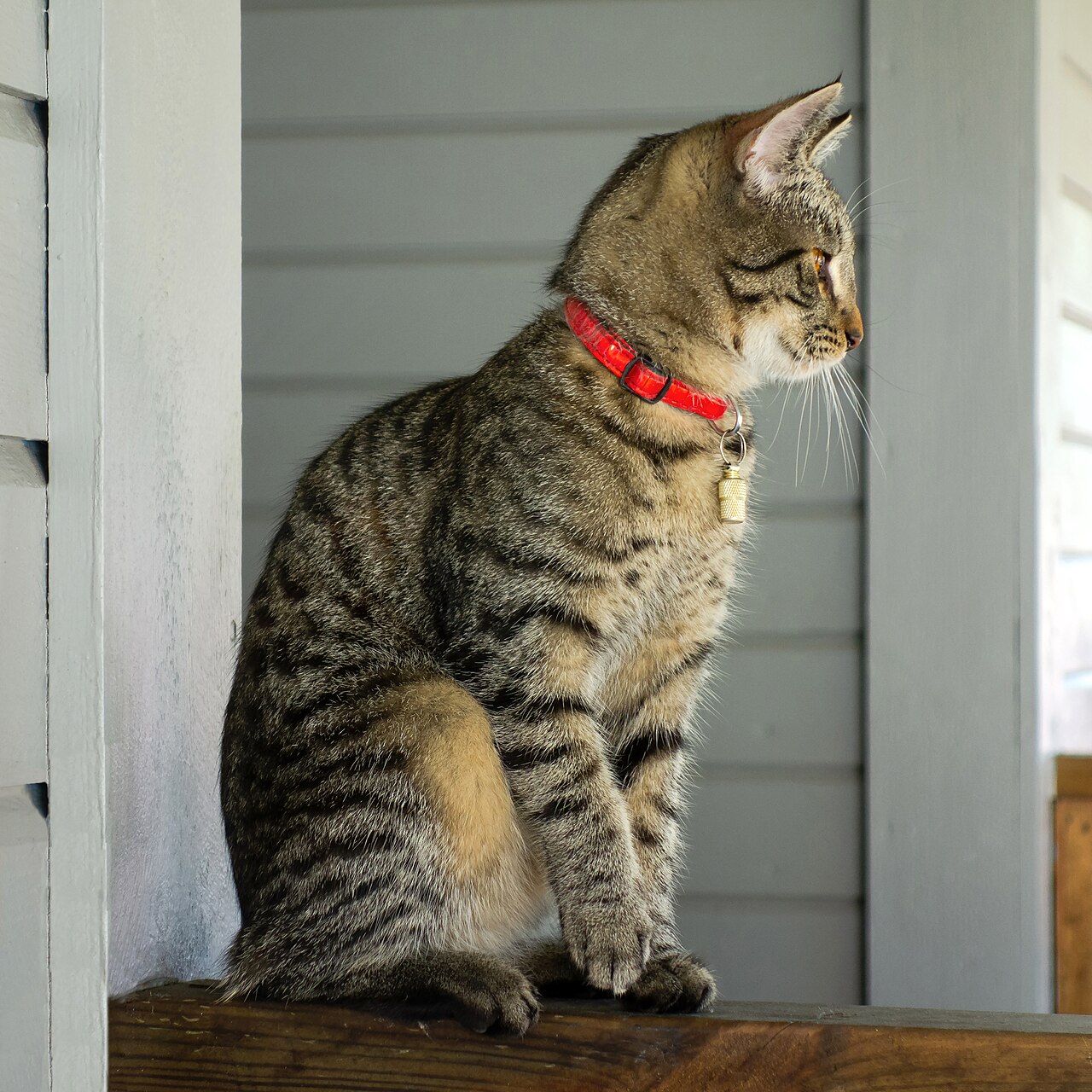
A representative of the cat community, a tabby named Pudding, issued a short statement: “Yes.” The Bureau regards this as a ringing endorsement.
Early reactions
Within an hour of the announcement, the Bureau received 212 messages of support, nine of confusion and one from a cat who simply wrote “more.” Several customers asked whether the treats could be substituted for tuna. The Director replied that tuna is a matter for the Premium Committee, which meets rarely and tends to eat the minutes.
Implementation
Collection boxes will be placed in all regional offices. They are small, brown, and clearly labelled. Please note that the boxes have been used in the past for naps, and the Bureau does not accept responsibility for what is found in them.
-
Customer Letter of the Month: ‘My Cat Pushed My Laptop and I Would Like a Refund for Everything’
The letter
Dear Purrfect Drop,
I am writing about my laptop. It was on the arm of my sofa, where it had been for many years, and my cat, Biscotti, pushed it onto the floor. It no longer turns on. I would like a refund for the laptop, my screen, my keyboard, my memories, and the coffee I was holding at the time.
Yours in distress, A Policyholder
Our reply
Dear Policyholder,
Thank you for writing, and for your patience while we read your letter, which had in fact been delivered to the wrong desk and spent some time under a cat.
We are sorry to hear about the laptop. We are also sorry about the coffee, which we understand was warm.
What your policy covers
Your policy covers one laptop, up to a value of £600, in the event of an act of cat. It does not cover memories, which the Bureau has found to be difficult to value, nor does it cover the coffee, which we regard as a consumable.
What we need from you
- A photograph of the laptop, before and after.
- A statement from the cat. If the cat cannot provide one, a statement from a witness.
- A short description of the sofa arm, including whether it was the type of arm that invites trouble.
A note on the sofa arm
Our records show that sofa arms account for nineteen percent of all laptop claims. We advise that laptops be kept away from sofa arms and, where possible, away from cats. If neither is feasible, we recommend investing in a stand, a case, and a very serious conversation.
Your payout
We are pleased to inform you that the Bureau has approved your claim at sixty percent of the laptop’s value. The remaining forty percent is withheld on account of your having left a laptop near a cat.
Yours sincerely, Inspector Marmalade Quill
Further correspondence
The policyholder replied the following week with a short note. “Thank you for the leaflet,” it read. “I have placed it on the sofa arm, to keep the laptop company.” We take this as a good sign, though we have not told him the leaflet has since been pushed.
What happened to the laptop
The laptop was sent to a repair shop run by a retired technician and his three cats. After inspection it was declared “mostly fine,” a verdict that included a cracked screen, a bent hinge and a small amount of fur in the fan. It now runs, slowly and with great dignity, and it makes a sound like a purr whenever it is switched on.
Our advice to laptop owners
Never leave a laptop on a surface you would not trust with a cup of tea. Never trust a cat who is sitting very still near a laptop. Never assume the lid is closed because it looks closed. And never, under any circumstances, let the cat see you check your email on the sofa arm, since she will interpret this as a challenge.
A word about memories
Policyholders often ask whether we can cover memories. We cannot, but we do offer a modest, one off gesture of sympathy in the form of a card, which we have been told is rather nice. The card features a drawing of a cat holding a very small umbrella over a very small laptop. It is not a legal document.
A general note on refunds
The Bureau does not provide refunds for everything. It provides refunds for something, at a reasonable rate, after a reasonable delay, and with reasonable reluctance. We regard this as the foundation of a long and trusting relationship between a company and the people it quietly disappoints.
In closing
We thank all customers who write to us, whether in distress, in anger or in poetry. Every letter is read by a cat, and most are answered by a human, who is paid slightly less.
-
Assessor Diary: A Week of Staring at Things That Fell
Monday
Arrived at 8:15. The first claim of the week involved a lamp, a rug and a very confident ginger cat. I knelt down to measure the distance between the lamp and the rug. The cat knelt too, in the sense that she sat directly on my notes. We both stared at the lamp. I wrote “inconclusive” and she purred.
Tuesday
A flowerpot, a window ledge and a fear of heights. The policyholder insisted that his cat was afraid of the ledge and would never go near it. I found paw prints on the ledge, in dust, in a pattern that formed what looked very much like a signature. I took a photograph and was asked not to be dramatic.
Wednesday
Lunch was a sardine sandwich, which I ate at my desk while a colleague named Thimble asked if I was going to finish it. I was not. I do not believe a case has ever been solved without a sardine sandwich nearby.
Thursday
I attended a household in which every object on the lowest shelf had been moved, one centimetre at a time, over six weeks. The owner called this “a pattern.” I called it “a patient cat.” We agreed to call it Loss 17 and move on.
Friday
A quiet day. Only one claim, for a glass of wine and a cat who did not drink wine, but who did appear to be enjoying the aftermath. I filed the report under “mild and fragrant.”
Saturday and Sunday
The Bureau is closed at weekends, in theory. In practice, I spent both days looking at my own mug, which sat on the edge of my desk at home, placed there by someone who I now think was me. I moved it back by six centimetres. It remained there for an hour. Then the cat came in.
A thought for the week
Every loss has a story, and every story has a cat in it. Our job is not to blame the cat. It is to write down, in tidy handwriting, that we know exactly who did it.
Sunday evening, a postscript
Having re read this diary, I note with some alarm that I have written very little about the actual assessing. This is because the assessing is quite short. One arrives, one looks, one measures, one writes the word “cat.” The rest of the week is waiting, snacks, small talk and a growing feeling that the shelf is watching.
Things I carry in my bag
- A tape measure, silver, which cats love to chase and I love to retrieve.
- A magnifying glass, used mostly for looking at paw prints but sometimes for looking at nothing in a thoughtful way.
- A notebook, stained with tea and the occasional fishy thumbprint.
- A spare notebook, for the notes the first notebook was sat on.
- A small bag of treats, for bribery, diplomacy and morale.
A recurring problem
Every second claim contains the sentence “she has never done this before.” I have heard it so often that I have it embroidered on a cushion. In my experience, a cat who has never done something before is a cat who is about to start. The phrase is not a defence but a forecast.
Rules I have learned
First, never stand directly under the item in question. Second, never stand directly behind the cat. Third, never agree to hold the cat’s tail for her while she thinks. Fourth, if a cat looks at you and then at a glass, step back with the grace of someone who has made the right call.
What I would tell my younger self
Work gets easier, but not by much. The vases do not become any less fragile, and the cats do not become any less certain. One simply learns to bring a thermos, and a second sandwich, and a quiet feeling of respect for a profession that has the cat as its central figure and the floor as its main character.
Final thoughts
If you are ever in doubt, remember that I am always here, in my small grey coat, writing the word cat in a neat hand. It is a job, and it is a calling. It is also, I admit, a great deal of fun.
-
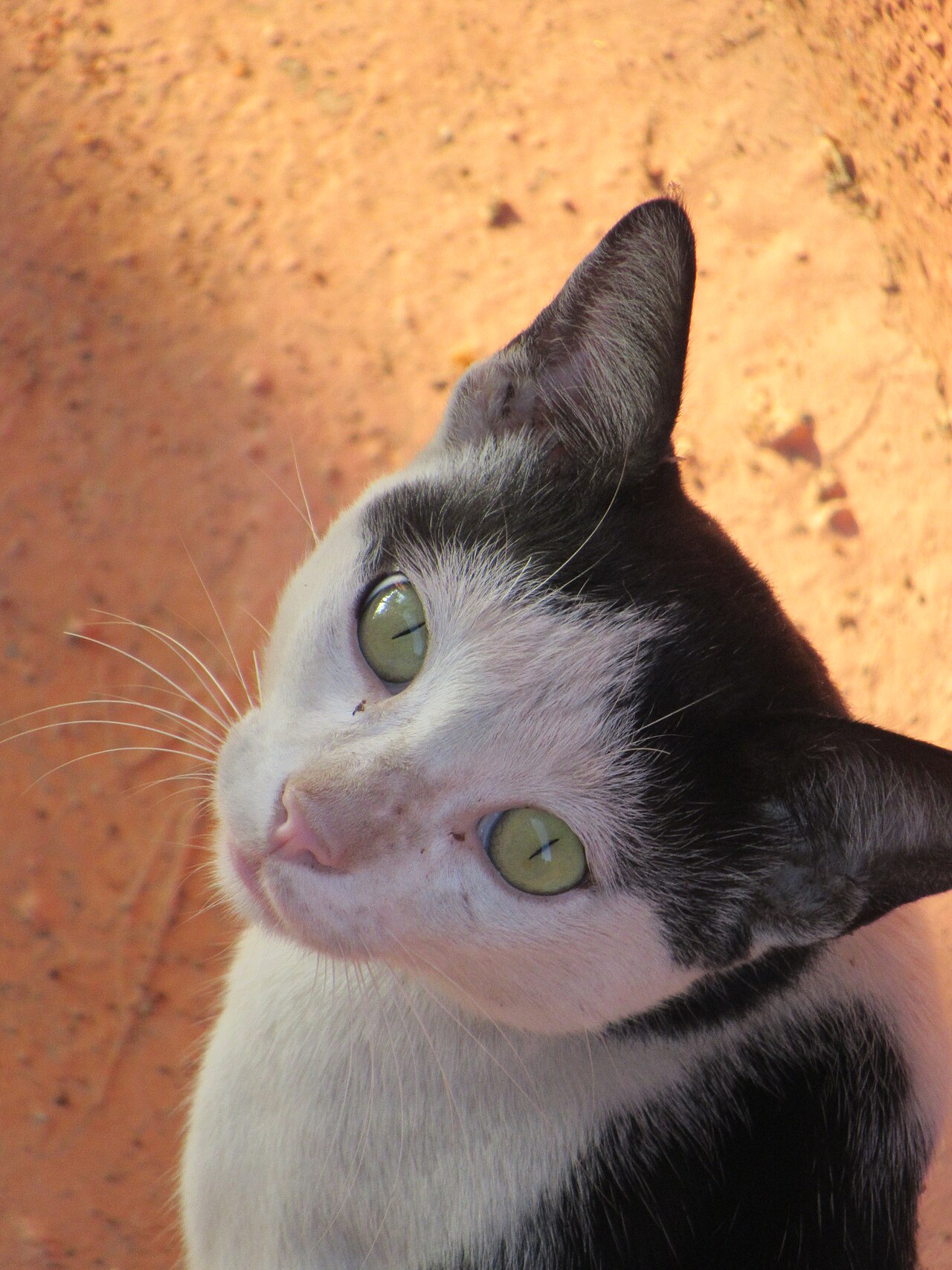
Policy Wording Explained: What ‘Act of Cat’ Really Means
Every Purrfect Drop policy contains the phrase “act of cat.” It appears in Section 3, between “act of God” and “act of mild neglect.” Customers write to us weekly to ask what it means. We reply in a leaflet, which the customers find less helpful than the phrase.
The short version
An act of cat is any loss caused by a cat that a reasonable person could not have prevented, unless a reasonable person could have, in which case it is an act of person.
The longer version
The courts of our imagination have held that an act of cat requires three elements. First, a cat must be present. Second, an object must be nearby. Third, a loss must follow. The order of these elements is not important, and indeed, the cat often arrives last.
Examples that qualify
- A glass of water pushed from a table while the owner is in another room.
- A plant knocked from a windowsill in pursuit of a bird that does not exist.
- A laptop charger chewed through at a rate of one centimetre per minute.
- A lamp tipped by a cat who was merely checking if it was real.
Examples that do not qualify
- A vase dropped by a human who is blaming the cat.
- A cake eaten by a human who is blaming the cat.
- A broken window caused by a football, followed by a cat sitting beside it looking involved.
Why we do not define it further
If we defined act of cat too carefully, we would be obliged to pay for it. By leaving the phrase gently open, we preserve the dignity of the Bureau and the mystery of the cat.
One more thing
If your claim is rejected on the grounds of an act of person, you may appeal. The appeal form is available at the front desk and takes the form of a cat sitting on a document until it is stamped.