Category: Assessor Notes

  • Field Notes: The Cushion Question

    Field Notes: The Cushion Question

    A recurring dispute in our claims department concerns the cushion. It lies on the floor, it appears in photographs, and it is occasionally blamed.

    The soft landing argument

    Some policyholders claim that a cushion beneath a falling item should prevent a loss. Our panel observed that this is true, but only if the cushion is placed there before the fall rather than after.

    The trap argument

    Others claim that cushions are a trap, placed deliberately by the cat so that she can say the fall was gentle. We have no evidence for this, though it is exactly what a clever cat would do.

    The witness argument

    A third view holds that the cushion saw everything. We attempted to interview a cushion. It did not respond, which the panel regards as suspicious.

    Ruling

    The panel has concluded that a cushion is neither a landing, a trap, nor a witness, but a cushion. We recommend that cats be allowed to sit on them as a matter of course.

    Public submissions

    The panel received eleven written submissions on the subject. Nine argued that the cushion was a soft landing. One argued that it was a trap. One was a drawing of a cushion with a small face, which the panel found moving but unhelpful.

    Practical advice

    Policyholders are advised not to rely on cushions as a protective measure. Instead, they should keep fragile objects away from edges and cats away from objects. If both are impossible, a cushion is a pleasant thing to have nearby, and it makes the aftermath more comfortable for everyone.

    Dissenting opinion

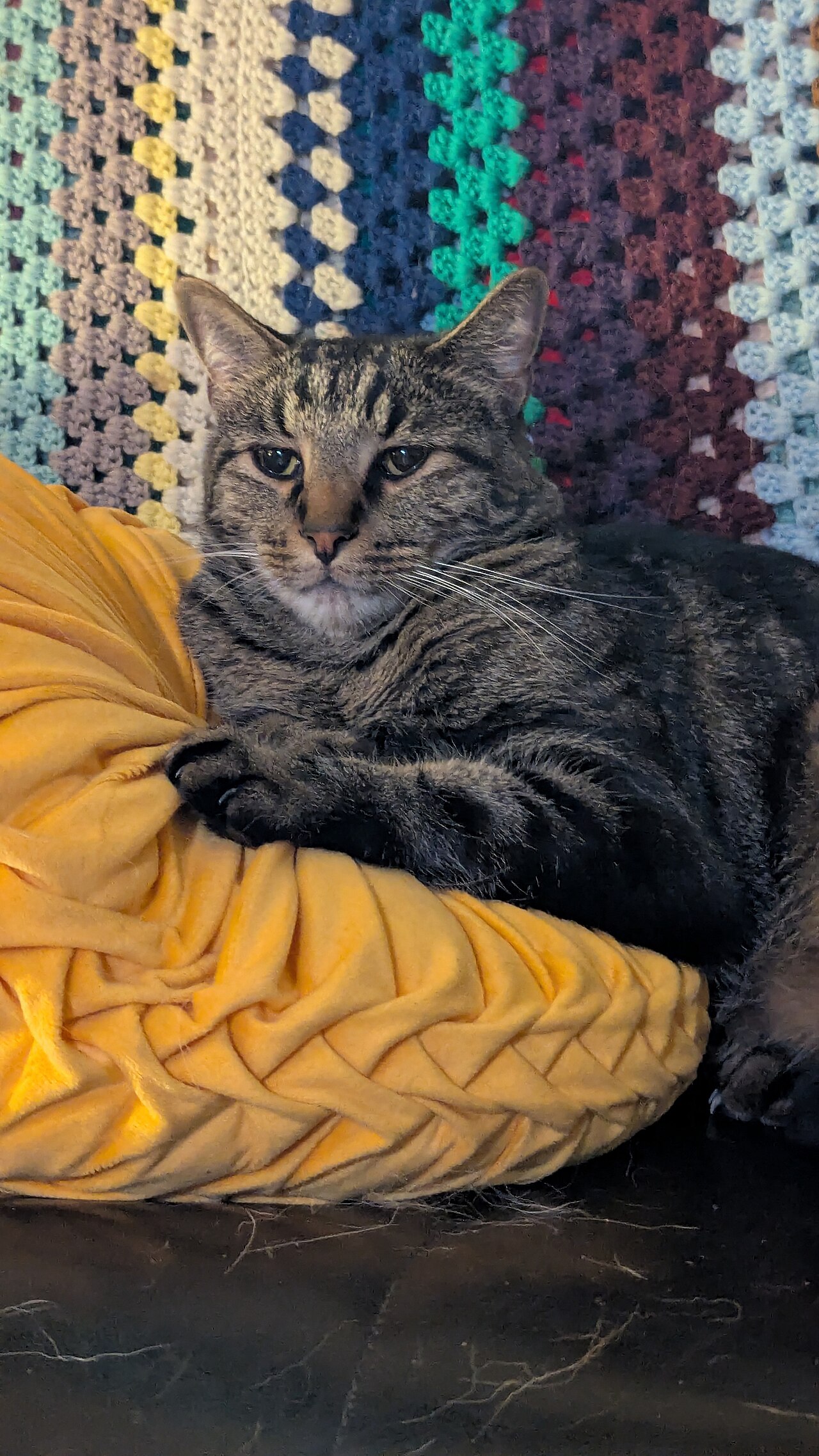
    One panel member, a brisk grey cat named Ledger, filed a dissent. It read, in full, “It is a cushion. I am sitting on it.” The panel noted her view and asked her to move.

    Closing remark

    The cushion has since been returned to the sofa, where it remains under review.

  • Assessor Handbook Extract: How To Interview a Suspect Cat

    Assessor Handbook Extract: How To Interview a Suspect Cat

    Before you begin

    A cat interview is not a conversation. It is a negotiation, and the cat holds all the cards, most of them in her paws. Prepare a calm room, a comfortable chair, a notebook and a small plate of something fishy. Do not bring a tape recorder. Cats consider recorders rude.

    Opening the interview

    Begin with a casual greeting, such as “Good afternoon.” The cat will not respond. This is normal. Wait for a count of ten and then say, “I understand there was an incident.” The cat will look at the wall. Make a note.

    Key questions

    • Where were you at the time of the incident?
    • What were your intentions?
    • Is this your tail, or is it a colleague’s?
    • Would you say the vase looked ready?

    Interpreting the answers

    A cat who answers by washing her face is saying “I decline to comment.” A cat who walks away slowly is saying “I have already been cleared.” A cat who falls asleep is saying “You are not very good at this.”

    Concluding the interview

    Thank the cat. Do not shake a paw. Leave a treat as a gesture of goodwill and do not mention it in the report.

    Common pitfalls

    Do not interview two cats at once. They will reach a private agreement within seconds, usually based on a look, and you will be left with two identical silences. Do not offer a cat a seat that is lower than yours. She will take it as an insult and sit on your coat instead. Do not ask a cat to describe a vase in her own words. She will use the only word she has, which is a very long stare.

    Notes on body language

    • Slow blink: a sign of trust, or of boredom, depending on the hour.
    • Ears flat: a sign that you have reached the end of the interview.
    • Tail wrapped around the paws: a sign of composure, and probably guilt.
    • Standing up, stretching and walking away: a sign of a full confession, delivered in the only language she has.
  • Assessor Diary: A Week of Staring at Things That Fell

    Assessor Diary: A Week of Staring at Things That Fell

    Monday

    Arrived at 8:15. The first claim of the week involved a lamp, a rug and a very confident ginger cat. I knelt down to measure the distance between the lamp and the rug. The cat knelt too, in the sense that she sat directly on my notes. We both stared at the lamp. I wrote “inconclusive” and she purred.

    Tuesday

    A flowerpot, a window ledge and a fear of heights. The policyholder insisted that his cat was afraid of the ledge and would never go near it. I found paw prints on the ledge, in dust, in a pattern that formed what looked very much like a signature. I took a photograph and was asked not to be dramatic.

    Wednesday

    Lunch was a sardine sandwich, which I ate at my desk while a colleague named Thimble asked if I was going to finish it. I was not. I do not believe a case has ever been solved without a sardine sandwich nearby.

    Thursday

    I attended a household in which every object on the lowest shelf had been moved, one centimetre at a time, over six weeks. The owner called this “a pattern.” I called it “a patient cat.” We agreed to call it Loss 17 and move on.

    Friday

    A quiet day. Only one claim, for a glass of wine and a cat who did not drink wine, but who did appear to be enjoying the aftermath. I filed the report under “mild and fragrant.”

    Saturday and Sunday

    The Bureau is closed at weekends, in theory. In practice, I spent both days looking at my own mug, which sat on the edge of my desk at home, placed there by someone who I now think was me. I moved it back by six centimetres. It remained there for an hour. Then the cat came in.

    A thought for the week

    Every loss has a story, and every story has a cat in it. Our job is not to blame the cat. It is to write down, in tidy handwriting, that we know exactly who did it.

    Sunday evening, a postscript

    Having re read this diary, I note with some alarm that I have written very little about the actual assessing. This is because the assessing is quite short. One arrives, one looks, one measures, one writes the word “cat.” The rest of the week is waiting, snacks, small talk and a growing feeling that the shelf is watching.

    Things I carry in my bag

    • A tape measure, silver, which cats love to chase and I love to retrieve.
    • A magnifying glass, used mostly for looking at paw prints but sometimes for looking at nothing in a thoughtful way.
    • A notebook, stained with tea and the occasional fishy thumbprint.
    • A spare notebook, for the notes the first notebook was sat on.
    • A small bag of treats, for bribery, diplomacy and morale.

    A recurring problem

    Every second claim contains the sentence “she has never done this before.” I have heard it so often that I have it embroidered on a cushion. In my experience, a cat who has never done something before is a cat who is about to start. The phrase is not a defence but a forecast.

    Rules I have learned

    First, never stand directly under the item in question. Second, never stand directly behind the cat. Third, never agree to hold the cat’s tail for her while she thinks. Fourth, if a cat looks at you and then at a glass, step back with the grace of someone who has made the right call.

    What I would tell my younger self

    Work gets easier, but not by much. The vases do not become any less fragile, and the cats do not become any less certain. One simply learns to bring a thermos, and a second sandwich, and a quiet feeling of respect for a profession that has the cat as its central figure and the floor as its main character.

    Final thoughts

    If you are ever in doubt, remember that I am always here, in my small grey coat, writing the word cat in a neat hand. It is a job, and it is a calling. It is also, I admit, a great deal of fun.